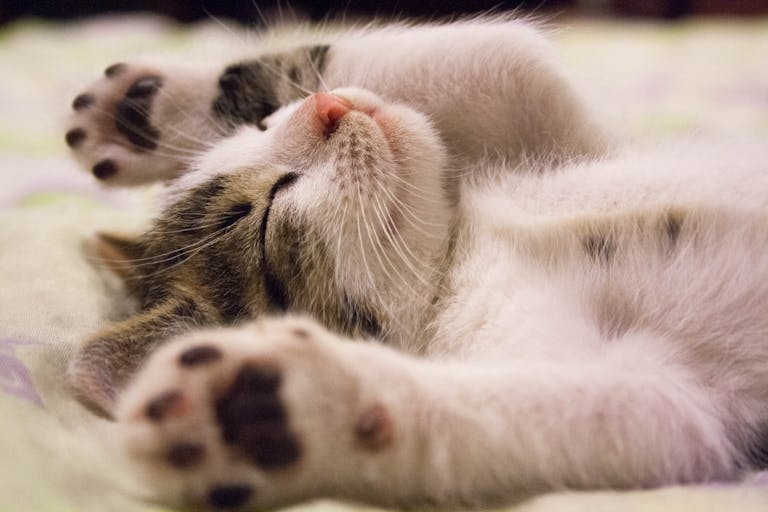
You've come fromadopt a kitten and want to live with him many years of shared tenderness? Find out how to bring him everything he needs for his development. A cat is full of mysteries, and to make him happy, you have to get to know him and respect its particularities.
Contrary to a popular idea, a cat is not a small dog. Although both are carnivores, their behaviour are very different. To ensure the well-being of your new petunderstanding these fundamental differences is essential.
Contents
Assess the Socialization of Your Kitten
The Essential Test
One of the first points to check is the level of socialisation Kitten. At the Clinique Veterinaire Paris 17, our teams can show you how to carry out this simple but crucial test of gently lifting the kitten through the neck.
- Well-socialized kitten : it curls up with the tail rising under the belly and has a glassy look. This behaviour indicates that he remained in contact with his mother long enough to develop adequate socialization.
- Unsocialized kitten : if the kitten starts to scream by pulling out his claws and arching his body, his level of socialization is low. It will be more difficult to make it a Pleasant pet with family. In this case, do not hesitate to consult our veterinary behaviour specialists which will help you to improve its tolerance.
The Foundations of Félin Development
Attachment, Socialization and Familiarization
The ability of a cat to socialize depends essentially on the quality of theattachment her mother and her level of socialization. The psychic development of the cat is played in only six weeks, much faster than in the dog.
It is still possible to improve socialisation at the usual age of adoption (about two months), but remember that a cat is not necessarily a sociable animal by nature.
Importance of the First Tenure Period
This period is of paramount importance as it allows the kitten to retain juvenile characteristics essential for living harmoniously with humans. This bond of attachment will give him:
- Trust in you
- Trust in him in unusual situations
- Ability to adapt to a new environment
Without this bond of attachment, your cat can become familiar with some family members but will hide as soon as a stranger is present. This is the main difference between Social cat and a cat just familiar.
If you observe worrying signs like a fearful kitten, foliments in contact, a kitten that is too wise or tytes its owner, quickly consult a veterinarian for appropriate advice.
Education and behaviour
Control Aggressiveness
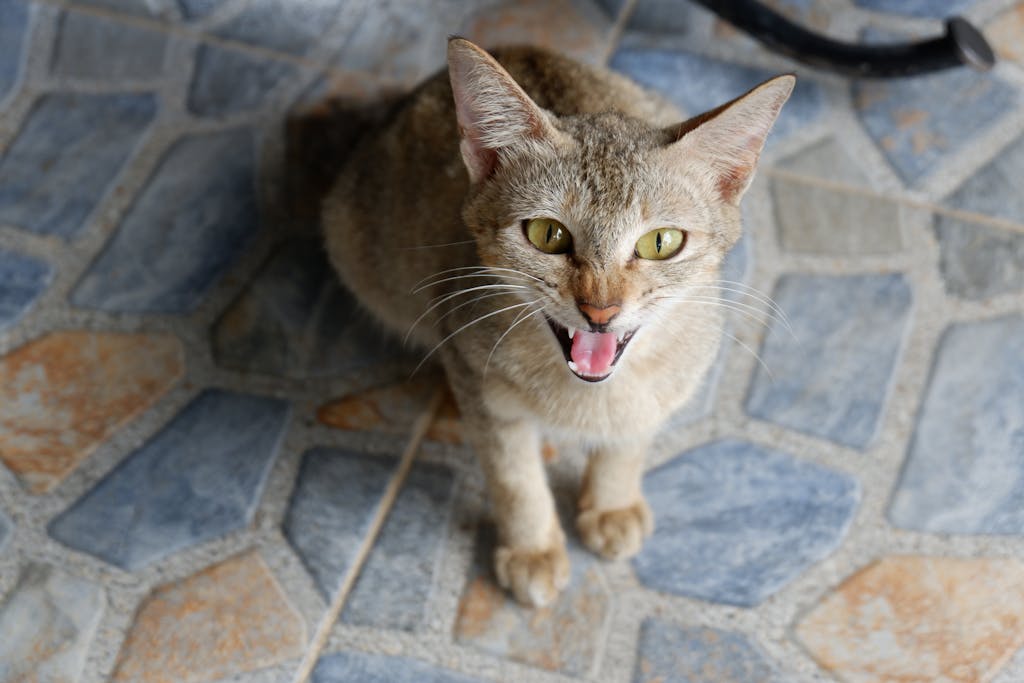
During its development, the mother teaches the kitten the self-checking – that is, the ability to regulate its movements and especially the action of its teeth and claws.
A well-educated kitten will always respect the face when playing games where it might have to scratch. If your kitten has not yet acquired this ability, several techniques inspired by maternal behaviour can be applied:
- A dry enough finger on his snout to give a stop signal
- For a very turbulent kitten, block him lying on the side and him « scratch » slightly belly
Attention : These methods are intended to instill control in your kitten and not to subject it. The notions of dominance and submission, valid in the dog, do not apply to the cat.
Organization of the Félin Territory
The cat is a territorial animal whose emotional balance depends on a harmonious structure of its space. He organizes his territory according to concepts very different from those of humans or dogs.
Essential Areas
Your cat divides its space into several main places:
- Field of isolation : space that the cat does not share or only with selected familiars. Often located in height for its safety.
- Fields of activity : areas dedicated to specific occupations (hunt, game, food, observation, elimination...
- Liaison routes : fixed path where the cat deposits pheromonal tags by rubbing against furniture.
Organisational Practical Advice
To encourage the adaptation of your kitten:
- From the first day, assign him a quiet place that no one will come to disturb: it will be his isolation field.
- Teach all members of the household, especially children, to respect this private space.
- Avoid cleaning the marks left by your kitten when it rubs against furniture, as this would erase its pheromones and could develop an anxious state in it.
Cleanliness Management
Preventing Impairedness
The kittens are naturally clean very early (from three weeks), which explains the great disappointment of the owners in the face of an unhealthy cat. To avoid these problems, take some essential precautions:
- The litter must always be accessible, especially at night
- The disposal space shall be a quiet place, free from disturbance
- The litter box has to be changed very frequently – some cats refuse to use a litter box that has already been polluted, even by themselves!
Distinguishing and Marking
We must not confuse uncleanness with urinary marking. The latter follows a particular sequence that your veterinarian will identify and can report a state ofanxiety.
If your cat does its needs outside its litter box, quickly consult a Veterinary. The earlier the diagnosis, the faster the resolution. About a third of cats experience cleanliness problems at some point in their lives, but these easily resolve with adequate care.
L’Importance du Jeu
The kitten is naturally more predatory than the puppy and will prefer the hunting games social games. It is essential to share fun moments with your kitten to verify that he has acquired his self-controls. If your hands systematically have scratch marks, consult your veterinarian to improve these behaviours.
Stimulate Hunter's Instinct
Give your kitten regular opportunities to play the little hunter:
- Aluminium paper balls
- Mobile toys attached to a string
- Interactive toys suitable for feline
These activities enrich the environment of the kitten and contribute to its harmonious development. The absence of stimulation can cause the kitten to attack the moving elements of its environment, such as your hands and feet.
Veterinary monitoring and prevention
To ensure the long-term health of your kitten, several preventive aspects are essential:
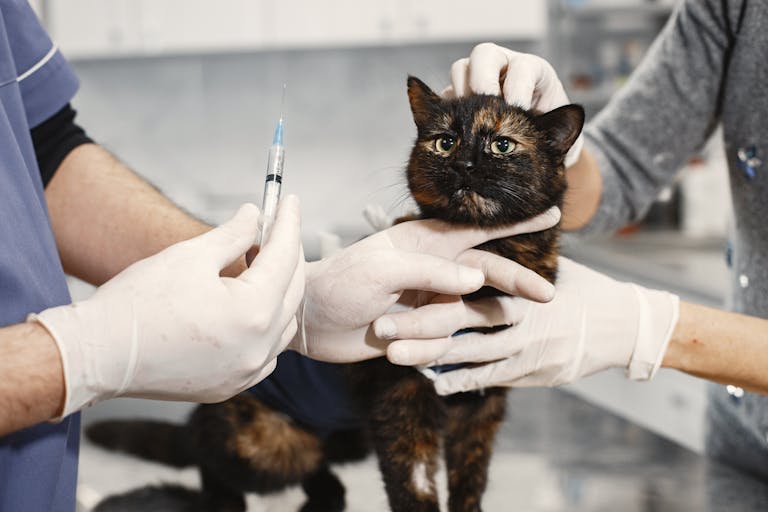
- Vaccines : Protect your kitten from common infectious diseases
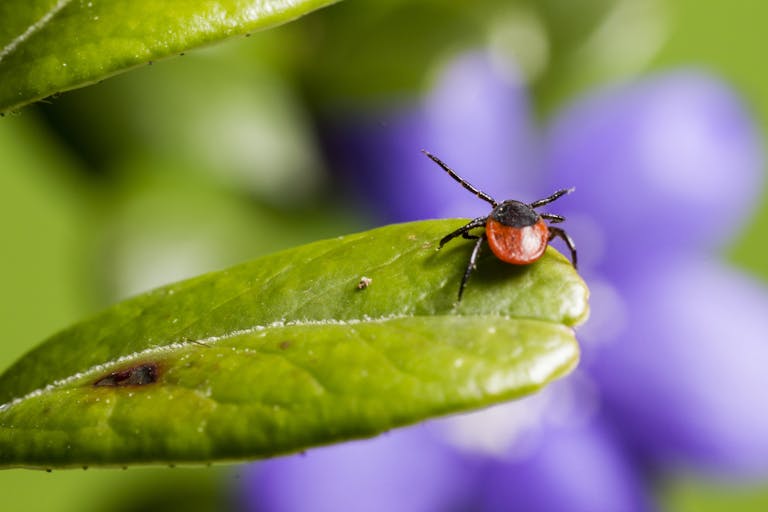
- Antiparasitics : regular treatments against fleas, ticks and worms
- Identification : mandatory by electronic chip or tattoo
- Sterilization : recommended to avoid unwanted behavioural and reproductive problems
Regular follow-up in your veterinarian will allow early detection of possible health problems and ensure the development of your feline companion.
N’hésitez pas à contacter les spécialistes de la Clinique Vétérinaire Paris 17 au 01.42.27.43.25 or online pour toute question concernant l’arrivée et l’adaptation de votre chaton.