Veterinary medical imaging
Our veterinary clinic uses the most advanced medical imaging technologies to offer a diagnosis accurate and fast to your pet. We can accurately visualize the internal structures of your animal to effectively detect and treat various pathologies.
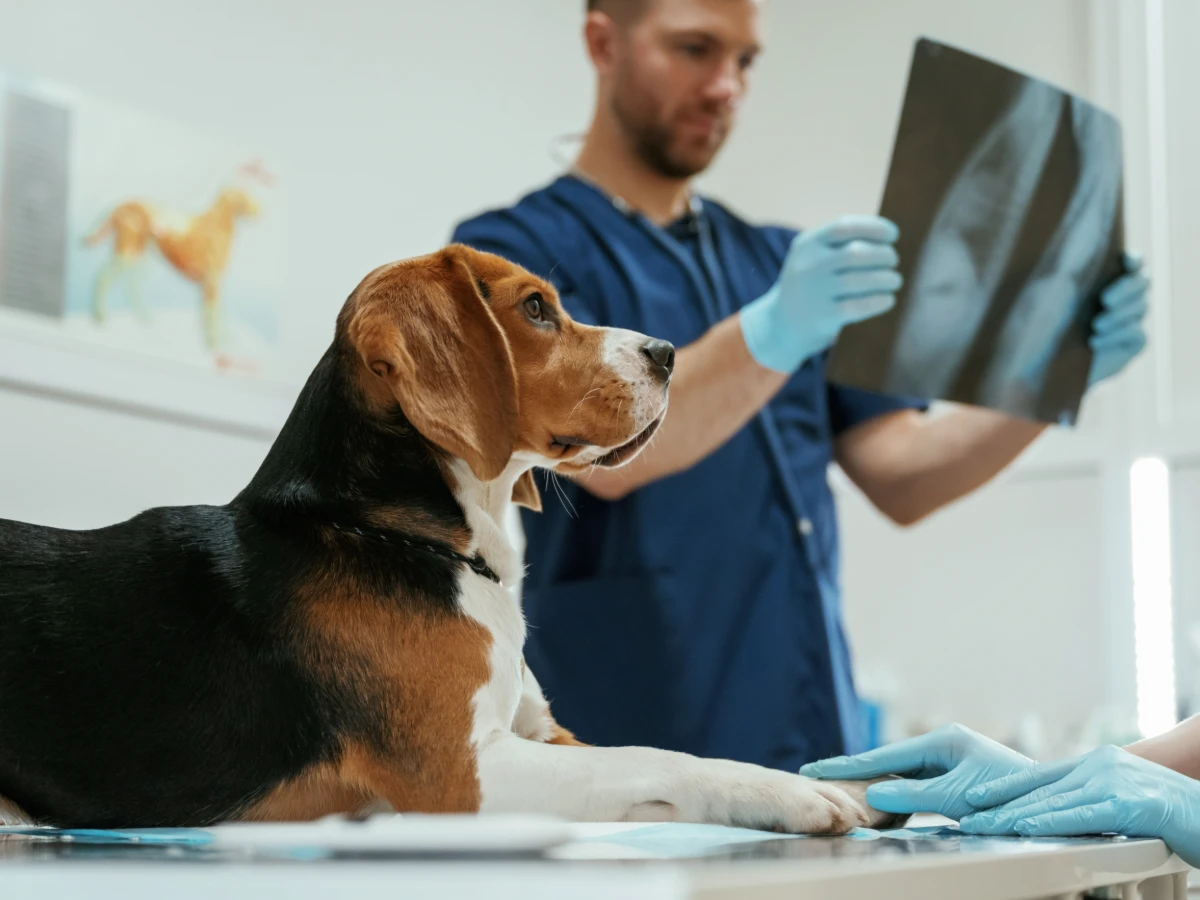
Radiography for Dogs and Cats
The veterinary radiography is often the first diagnostic tool used to assess many conditions. Within our clinic in Paris 17, we use a latest generation digital radiography. This technology offers images of exceptional quality while ensuring Minimum X-ray exposure for the safety of your pet.
The benefits of our digital radiography system include:
- Instant images : Allows a faster diagnosis and accelerated therapeutic decision-making.
- High image quality : Facilitates detection of even subtle lesions, crucial for early diagnosis.
- Increased security : Significant reduction in exposure radiation for your pet and our staff.
Current Radio Applications
X-ray helps us diagnose a wide range of conditions:
- Thoracic pathologies Detailed review of lungs, heart and large vessels ( pneumonia diagnosis, heart failure, masses...).
- Anomalies abdominal Evaluation of organs such as stomach, intestines, bladder to detect foreign bodies, masses, calculations or other disorders.
- Problems osteoarticular : Accurate diagnosis of fractures, dislocations, signs ofosteoarthritis, or skeletal abnormalities.
- Gestational diagnosis : Confirmation and monitoring of pregnancy in bitches and pussy.
Echography : Exploration of soft fabrics
Lveterinary ultrasound uses ultrasound to create dynamic images of internal bodies and soft tissue. It's a technique. Totally painless and safe. At the Clinique Vétérinaire Paris 17, we collaborate with veterinary specialists in imaging who intervene directly at the clinic with their state-of-the-art equipment.
This approach offers two major benefits:
- Your animal stays in a familiar and reassuring environment, examined by his attending veterinarian and the specialist, which significantly reduces stress.
- You benefit from theexpertise of highly qualified specialists andadvanced ultrasound equipment for one diagnosis of the highest accuracy.
Echography Cat and Dog: Specific Applications
The ultrasound is particularly valuable for:
- Detailed abdominal examination : Fine visualization of the liver, kidneys, the rate, pancreas, bladder, intestines...
- Echocardiography : Comprehensive evaluation of the structure and the function heart.
- Pregnancy monitoring : Confirmation, accurate dating, counting and monitoring of the foetus viability Development.
- Early detection : Identification of tumours, cysts, Abscesses and other tissue abnormalities, often prior to major clinical signs.
- Guidance for biopsies : Allows Sample sampling (biopsies) in a targeted manner and minimally invasive.
Veterinary endoscopy
Lendoscopy the introduction of a miniaturized camera (endoscope) in natural cavities or by small incisions to visualize directly inside the body. Thanks to our veterinary specialists partners, we can perform various endoscopic examinations at the clinic:
- Gastroscopy Exploration of the esophagus, stomach and first part of the intestine (duodenum).
- Colosscopy Review of the colon.
- Bronchoscopy Assessment of trachea and bronchial conditions.
- Rhinoscopy : Examination of nasal cavities.
The unique advantage of providing not only a direct visualization of lesions but also the realization of Targeted biopsies and, in some cases, immediate treatment (as in removal of foreign objects digestive or respiratory disorders).
When Is Veterinary Medical Imagery Necessary?
Your veterinarian may recommend a imaging examination if your animal has:
- Persistent digestive disorders (vomiting, diarrhoea, loss of appetite, constipation).
- Respiratory difficulties, chronic cough or frequent sneezing.
- Boxes, joint pain or difficulties in moving.
- Fracture Suspicion, of dislocations or following a trauma (accident, fall).
- Urinary disorders (difficulty urinating, blood in urine) or reproduction.
- Need for follow-up for chronic diseases (cardiacs, kidneys, tumours...).
- In the context of Health Check preventive, particularly among Aged animals or certain predisposed races.
Complementarity with Laboratory Analyses
Medical imaging examinations are often associated with laboratory analyses to refine and confirm diagnostics. Discover our page dedicated to veterinary bioassays.
Frequently Asked Questions on Imaging
Find here the answers to the most frequently asked questions on this subject.
Need a specific diagnosis for your pet?
Contact the Clinic to make an appointment for an imaging examination adapted to your companion.
(We offer additional appointments by phone)