What is veterinary orthopedics?
Veterinary orthopedics is a speciality dedicated to the treatment of musculoskeletal disorders in animals. This discipline includes the diagnosis and treatment of conditions affecting bones, joints, ligaments, tendons and muscles.
Our orthopaedic surgery service in Paris 17 offers both preventive and curative interventions to treat various diseases that can significantly affect the quality of life of your animal. Thanks to the expertise of our specialist surgeon and our advanced equipment, we guarantee complete and personalized support.
Pathologies treated in veterinary orthopaedics
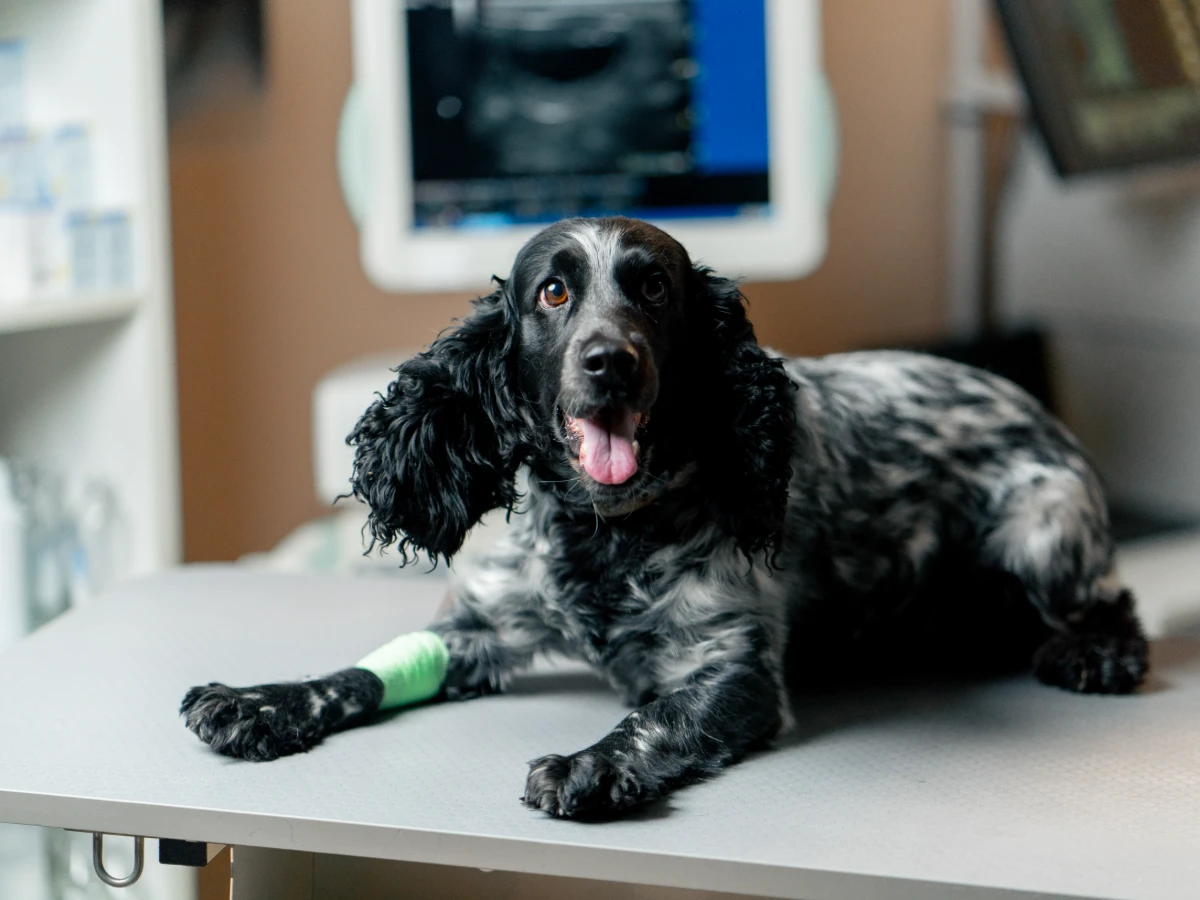
Our veterinary clinic supports many orthopaedic conditions that mainly affect dogs and cats, but also new pets (NAC). Among the most common problems addressed:
For dogs:
- Hip and elbow dysplasia
- Out of cross ligaments
- Dislocation of the patella
- Complex fractures
- Osteoarthritis
For cats:
- Various fractures (including basin)
- Joint losses
- Tensile cuts
- Bone growth problems
These pathologies often require specialized surgery to restore mobility and relieve the pain of your animal.
Our orthopaedic surgery service
The expertise of a specialist surgeon
At the Veterinary Clinic Paris 17, the Doctor Hugues Journaux collaborates with a specialist orthopaedic surgeon who regularly moves to our premises. This partnership allows us to offer surgical procedures high technology while ensuring close monitoring.
Our external surgeon has extensive expertise in modern orthopedic surgical techniques, particularly in the TPLO (Tibial Plateau Leveling Osteotomy) and TTA (Tibial Tuberosity Advance) interventions for the treatment of cross ligament ruptures, as well as in advanced d-osteosynthesis techniques for the repair of complex fractures.
An Orthopedic Care Less Constraint
During our orthopaedic surgery, we prefer an intradermal suture technique, which leaves no visible thread on the surface. This modern method not only improves the post-operative comfort of your animal, but also the quality of healing. The main advantages:
- Faster healing;
- Less visible scar;
- Your animal cannot access the wires with its teeth, which allows:
- No dressing necessary;
- In most cases, the collar is not required, even after complex surgery.
When to consult for an orthopaedic problem?
It is important to consult quickly when you observe in your pet:
- Persistent or intermittent lameness
- Difficult to get up or climb stairs
- Swelling in a joint
- An abnormal position of a member
- A reluctance to exercise or play
- Signs of pain during manipulation
Early management of orthopaedic problems often avoids complications and improves the long-term prognosis.
Other Surgical services
Our veterinary clinic in Paris 17 also offers other types of surgery complementary to general surgery:
- General surgery treatment of tumours, hernias, wounds and other common conditions
- Sterilization and castration : preventive and therapeutic interventions for your animals
Frequently Asked Questions on orthopaedic surgery
Find here the answers to the most frequently asked questions on this subject.
Your animal suffers from an orthopedic problem?
Contact our Veterinary Clinic to benefit from the expertise of our specialist surgeon.
Quick support can make all the difference in your partner's recovery.
(We offer additional appointments by phone)