3 axes: safety, serenity, pain control
The surgerybut also some painful medical acts (biopsy for example) require anaesthesia. It has three fundamental actions: analgesia (the patient does not suffer from the gestures performed), myorelaxation (the patient cannot move, the veterinarian can make his gesture calmly) and loss of consciousness (the patient will not remember any medical or surgical procedures performed).
At the Veterinary Clinic Paris 17, anaesthesia will be adapted not only to the type of intervention the animal undergoes, but also to the age, race and physical state of the patient.
Why anaesthetist?
Veterinary anesthesia is essential in several situations:
- Surgical procedures (sterilization, tumour ablation, orthopaedic surgery)
- Dental procedures such as descaling
- Imaging examinations requiring perfect immobility
- Potentially painful or invasive medical examinations
- Health care Anxiety or aggressive animals
A properly anaesthetized animal does not experience any pain during the procedure, which greatly improves the procedure and the patient's comfort.
Types of veterinary anesthesia
Anesthesia for cat
The sedation of the cat requires special attention at the Clinique Veterinaire Paris 17. The feline have physiological specificities requiring appropriate anaesthetic protocols. We use molecules specifically dosed for cats, taking into account their particular metabolism and sensitivity to certain drugs.
Dog anesthesia
The sedation of the dog takes into account the particularities of each race, size and age. Large dogs, toy breeds or elderly dogs benefit from tailor-made protocols to minimize risks and optimize their comfort during the intervention. Our expertise allows us to precisely adapt the doses and types of anaesthetic used.
The different techniques
At the Clinique Veterinaire Paris 17, we practice several types of anesthesia according to the needs:
- Fixed general anesthesia : Administered by the venous or intramuscular route, this method is suitable for brief and painless interventions (30-60 minutes).
- General gaseous anesthesia : Our preferred method for most surgical procedures, offering maximum safety. It allows accurate control of the depth of the anesthesia and a faster awakening.
Our anesthesia protocol
Prior to sleep: preparation and evaluation
First of all, we realize:
- A complete clinical examination with particular attention to the cardio-respiratory function
- If necessary, a pre-anesthetic blood test to assess liver and renal function
- A suitable fasting (usually from the night before, with access to water until the morning of the intervention)
During the sleep phase: constant monitoring and adjustment
Our anaesthesia procedure takes place in several stages:
- Premedication Administration of a tranquilizer to reduce anxiety and facilitate induction.
- Laying a catheter : Allows anaesthetic injection and continuous infusion during surgery.
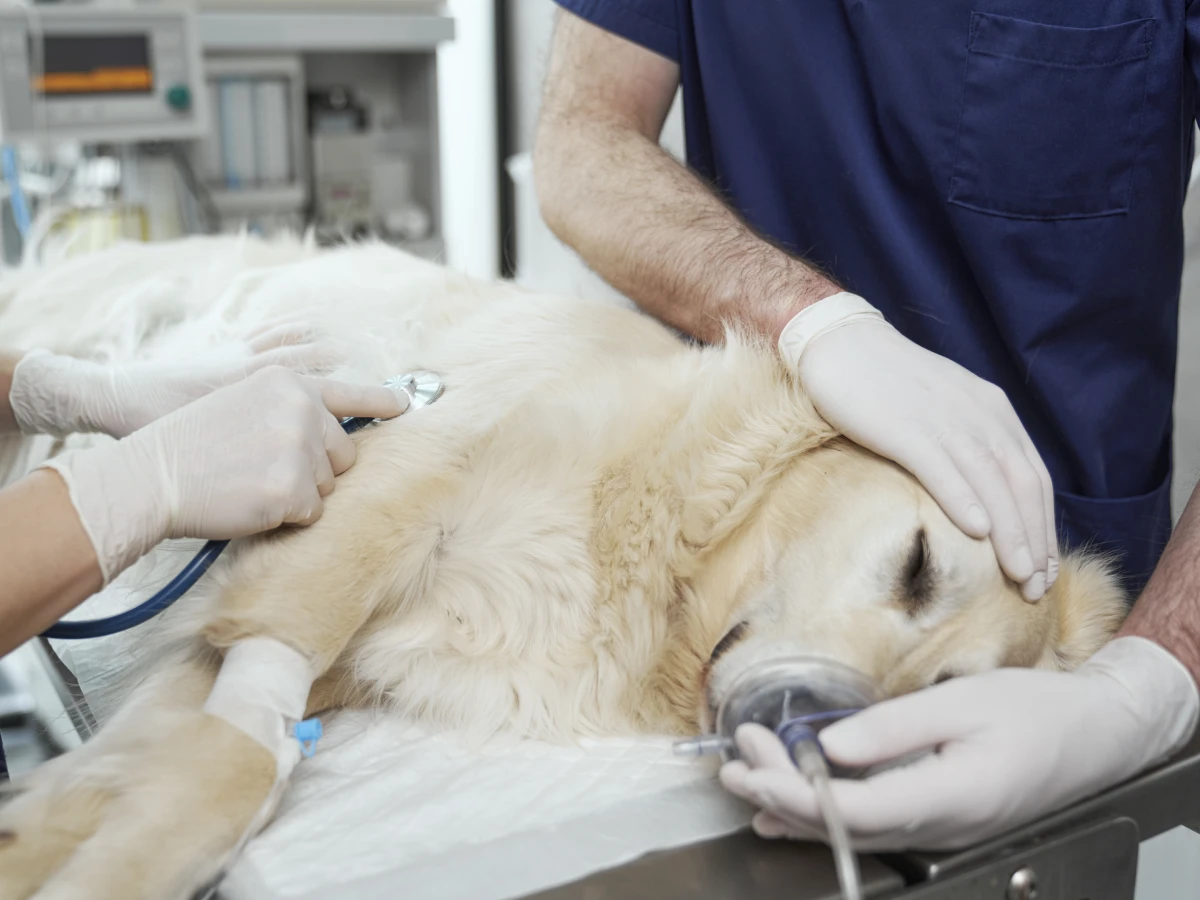
- Intubation : An endotracheal probe is set up to secure the respiratory tract and administer gas anesthetic.
- Maintenance of anesthesia : Thanks to a gas anesthesia respirator, offering maximum safety comparable to human anesthesia.
- Continuous monitoring Constant monitoring of vital parameters (heart rate, respiratory, blood pressure, oxygenation) using specialized equipment.
After anesthesia: surveillance of awakening
The awakening of your pet is done in a quiet room, under the careful monitoring of our team. We administer analgesics adapted to manage post-operative pain and provide personalized follow-up until full consciousness returns.
Potential side effects
Like any medical procedure, veterinary anesthesia can have certain side effects, although rare thanks to modern techniques and our rigorous protocol:
- Hypothermia Warning thanks to our heating mats and constant temperature monitoring.
- Hypotension : Controlled by blood pressure monitoring and infusion adjustment.
- Respiratory slowing : Monitored continuously thanks to our monitoring equipment.
- Post-anesthetic nausea : Managed by anti-emetic medicines if necessary.
It is important to note that the anaesthetic risk is extremely low in a controlled environment like our clinic. Studies show that the inexplicable surgical mortality rate is only 0.05% in dogs and 0.11% in cats.
Specific adaptations
For example: abdominal surgery will obviously require a much deeper anesthesia than a descaling ; an elderly patient and heart will receive an anaesthetic adapted to his pathology, taking into account the increased anaesthetic risk due to his condition.
A non-invasive medical examination (withdrawal of a sparrow in an auditory duct for example) but painful will be performed much more quickly and serenely with shallow anesthesia, but a significant analgesia.
The various anaesthetic molecules at our disposal today (injectable, gas) allow us to greatly increase the efficiency/risk ratio of anaesthesia.
There are as many different anaesthesia protocols as animals; It is important to perform anaesthesia adapted to each case.
Frequently Asked Questions on Endorsement of animals
Find here the answers to the most frequently asked questions about anesthesia.
Need an intervention for your pet?
Are you wondering about veterinary anesthesia for your cat or dog? Our team is at your disposal to answer all your questions and assist you in the care of your pet.
(We offer additional appointments by phone)