What is veterinary neurology?
Veterinary neurology is the branch of medicine dedicated to the study and treatment of nervous system diseases in animals. This includes the brain, spinal cord, nerves that travel the whole body, and even the muscles they control. A healthy nervous system is essential to your companion's well-being, allowing him to move, feel, think and interact with his environment.
As in humans, our dogs and cats may suffer from various neurological conditions, whether sudden or progressive. Early identification of signs is crucial for proper management.
Recognizing Signs of a Neurological Problem
Neurological symptoms in animals can be varied and sometimes subtle. It is important to be aware of changes in your partner's behaviour or physical abilities. Here are some signs that should alert you:
- Convulsions or seizures: Loss of consciousness, uncontrolled movements, pedalling, excessive salivation.
- Weakness or paralysis: Difficulties in getting up, severe lameness, inability to use one or more legs (may evoke a hernia disc).
- Loss of balance or disorientation: Stretch course, bent head, turns on itself, seems lost or confused (may occur during dstrokeor vestibular syndrome).
- Pain: Feeling or movement, refusal to move head or neck, vaulted posture.
- Trembling: Involuntary, localized or generalized muscle bruises.
- Changes in behaviour : Sudden aggression, increased anxiety, prostration, unusual malproprety (sometimes related to pain or disorientation, as mentioned in the case of osteoarthritis).
- Change of vision : Seems to hit objects, pupils of different sizes.
If you observe one or more of these neurological symptoms In your animal, a veterinary consultation is required quickly.
The main neurological conditions
Several types of conditions may cause neurological disorders in dogs and cats:
Brain and spinal cord disorders
The brain and spinal cord can be affected by various diseases such as:
- Brain tumours (meningiomas, gliomas)
- Epilepsy (idiopathic/genetic or secondary)
- Inflammatory diseases (stereoidosensitive meningitis, granulomatous encephalitis)
- Cranial or spinal cord injuries
- Stroke
- The Carré's disease (viral infection with neurological manifestations)
Spinal disorders
The spine protects the spinal cord but may be the seat of problems causing spinal compression:
- Hernia discs (common in some races such as Teckels or French Bouledogues)
- Wobbler syndrome (cervical instability, common in large breeds)
- Degenerative myelopathy (especially in the German Shepherd)
- Spondylosis and vertebral instability
- Rachidian trauma
Neuromuscular diseases
These conditions affect the connection between nerves or muscles themselves:
- Serious Myasthenia (neuromuscular transmission disorder)
- Polyradiculonevrite (Guillain-Barré syndrome)
- Myopathy (hereditary or acquired)
- Peripheral neuropathies
Aging disorders
- Cognitive dysfunction (equivalent to dementia in elderly animals)
- Geriatric vestibular syndrome (vertigo and imbalance in elderly dogs and cats)
Our Role: Your First Interlocutor
Even if our clinic does not have a specialist in neurology on site, our team, led by the Doctor Hugues Newspapers, is your first essential point of contact in case of suspicion of neurological disorder. We are here to:
- Listen carefully to your comments.
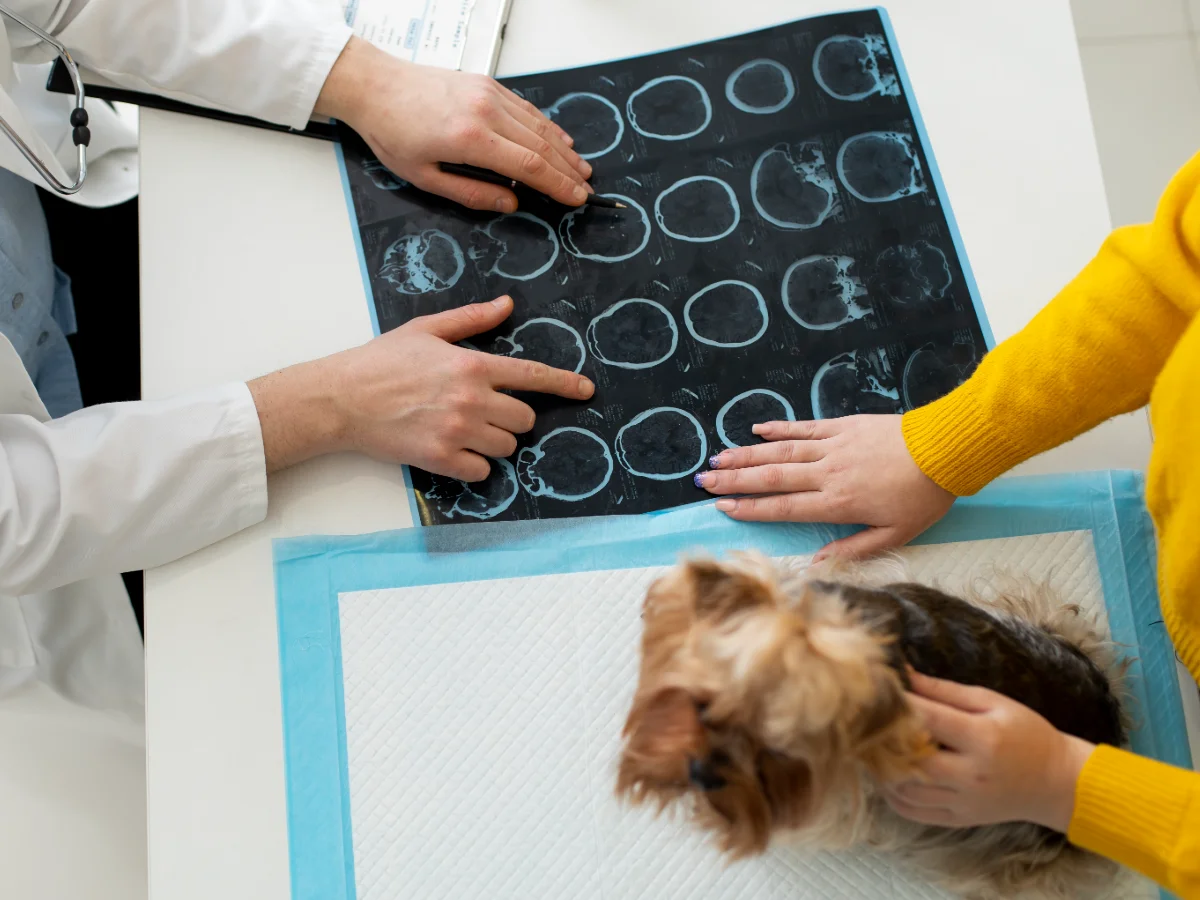
- Complete clinical and neurological examination.
- Perform the first relevant diagnostic examinations.
- Set up emergency or support treatments if necessary (management of seizures, pain).
- Discuss with you possible options: medical treatment manageable at the clinic or need for reference to a Specialist.
- Follow up in collaboration with the specialist if reference takes place.
Frequently Asked Questions on Neurology
Find here the answers to the most frequently asked questions on this subject.
Does your animal have unusual symptoms or behavior?
Contact our veterinary clinic, we will be able to make an initial assessment, discuss options and best guide you for the health of your companion.(We offer additional appointments by phone)